
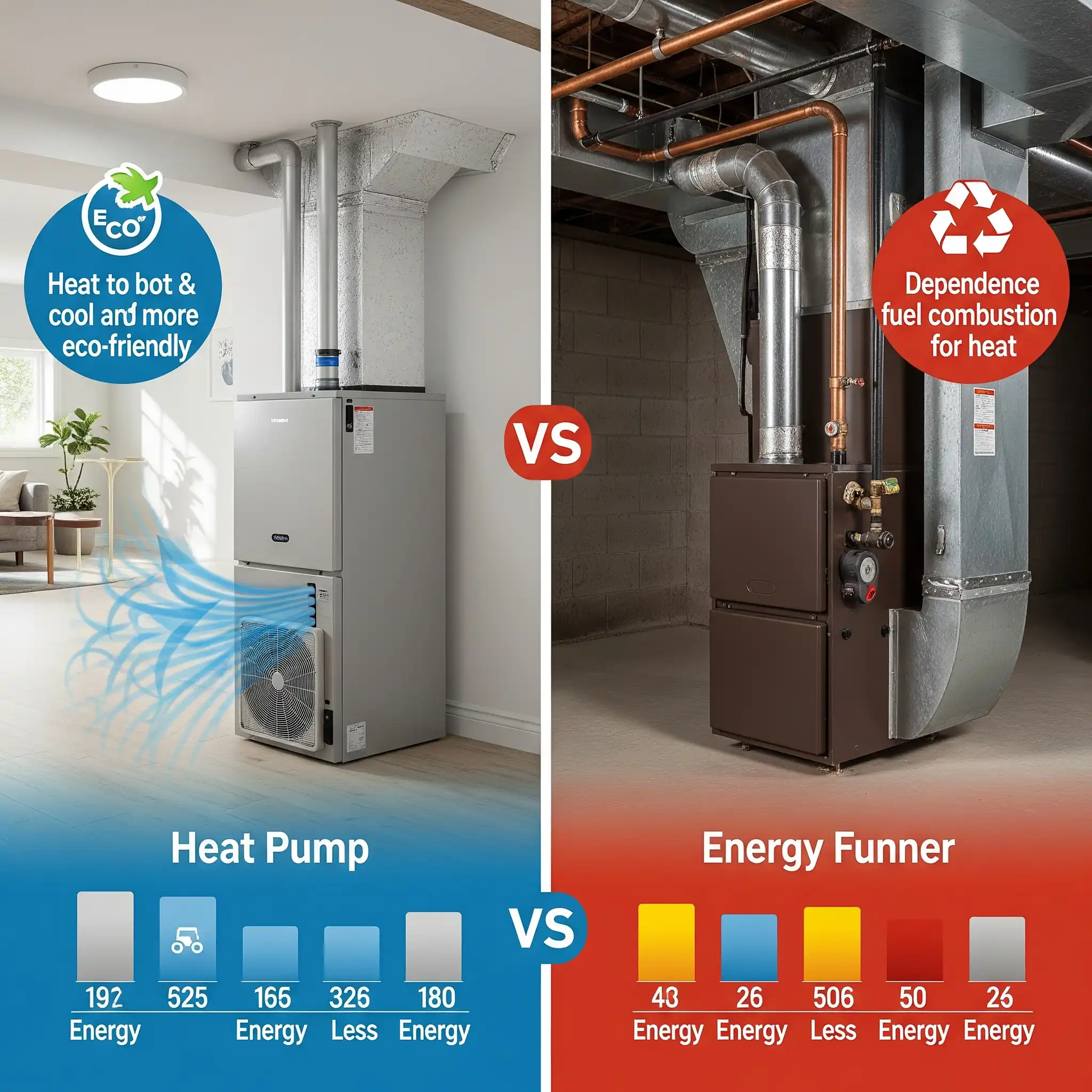
Choosing between a heat pump and a gas furnace used to come with a fairly reliable rule of thumb: gas was cheaper to run, heat pumps were better in mild climates. That rule has gotten considerably less reliable in recent years, as heat pump technology has improved, natural gas prices have climbed, and — as of 2026 — the federal tax credit that used to make heat pumps more attractive has expired. This guide breaks down the real cost comparison across upfront price, monthly operating cost, and long-term value.
Upfront Installation Cost
| System | Typical installed cost |
|---|---|
| Gas furnace (standard efficiency) | $4,000-$7,500 |
| Gas furnace (high-efficiency, 95%+ AFUE) | $6,000-$10,000 |
| Air-source heat pump | $6,000-$14,000 |
| Ductless mini-split heat pump | $4,000-$12,000 (varies by number of zones) |
| Ground-source (geothermal) heat pump | $20,000-$40,000+ |
A standard gas furnace generally costs less upfront than a comparable air-source heat pump, though the gap has narrowed somewhat as heat pump manufacturing has scaled. It’s also worth noting that a heat pump replaces the function of both a furnace and a central air conditioner in one system — if you’re comparing to a scenario where you’d otherwise need to replace an aging furnace and an aging AC unit separately, the heat pump’s relative cost position improves meaningfully, since you’re avoiding the cost of a second, separate system.
When comparing gas furnaces, check the AFUE rating to understand how efficiently each model converts fuel into useful heat. The U.S. Department of Energy explains furnace efficiency ratings and provides guidance on purchasing energy-efficient residential furnaces.
No Federal Tax Credit for Either Option in 2026
This is worth stating clearly upfront: the federal Energy Efficient Home Improvement Credit (Section 25C), which previously offered up to $2,000 toward a qualifying heat pump purchase, expired December 31, 2025, alongside the residential solar credit covered in our federal solar tax credit 2026 guide. Standard gas furnaces were never eligible for a comparable federal credit in most cases (high-efficiency models had more limited historical eligibility under the same now-expired program). In practical terms, this means the upfront cost comparison in 2026 is closer to an apples-to-apples comparison than in prior years, when the heat pump side of the equation often had a federal credit narrowing the gap. State and utility rebates for heat pumps do still exist in many areas — see our heat pump rebates and tax credits available in 2026 guide for what remains.
For homeowners comparing installations in 2026, the former federal Section 25C credit is no longer available for qualifying heat pump installations placed in service after December 31, 2025. Gas furnaces did not receive the same heat pump credit, although certain qualifying high-efficiency equipment had separate historical eligibility under the program. Check the applicable IRS guidance and current state or utility incentives before calculating the final cost.
Monthly Operating Cost: The Core Comparison
This is where the real complexity lives, since it depends on your specific electricity and gas rates, your climate, and the efficiency of the specific equipment.
The underlying energy math
As covered in our guide on [electric bill vs. gas bill: how to compare real costs], converting to a common unit shows that natural gas is typically cheaper per unit of raw energy than electricity — but a heat pump’s multiplying efficiency (delivering 2-4 units of heat per unit of electricity consumed, versus a gas furnace’s roughly 90-98% conversion efficiency) can close or even reverse that gap, depending on the specific numbers involved.
For a technical overview of how heat pumps transfer heat and how they compare with conventional heating systems, consult the U.S. Department of Energy’s guide to heat pump systems.
A realistic example
Using national average rates — natural gas at roughly $1.20/therm and electricity at roughly $0.16/kWh — and typical equipment efficiency:
| Heating type | Estimated annual operating cost (moderate climate) |
|---|---|
| Standard gas furnace (80% AFUE) | $750-$950 |
| High-efficiency gas furnace (95%+ AFUE) | $650-$850 |
| Air-source heat pump | $600-$1,000 |
| Ground-source heat pump | $450-$700 |
These ranges overlap meaningfully — which is the honest takeaway here. In many moderate climates, a well-sized, modern heat pump and a high-efficiency gas furnace land in a genuinely comparable cost range, with the specific winner depending heavily on your local utility rates and climate rather than one technology being universally cheaper.
Note: These annual operating costs are illustrative estimates, not national averages that apply to every home. Actual costs depend on local electricity and gas rates, winter temperatures, equipment efficiency, heating demand, and installation quality. The comparison also depends on whether cooling costs are included and whether a heat pump replaces both an existing furnace and a separate air conditioner. Use local utility rates and equipment-specific performance data to estimate costs for your home.
Estimate Your Own Heat Pump Operating Costs
The examples above are starting points, not a prediction of your household’s actual energy bill. To estimate your heat pump’s electricity costs using its power consumption, operating hours, and your electricity rate, try our Heat Pump Cost Calculator.
For a fair comparison with a gas furnace, use your actual utility rates and remember that a heat pump’s electricity use varies with outdoor temperatures, system efficiency, and your home’s heating demand. The calculator estimates electricity costs; it does not independently calculate your gas furnace costs or determine which system will be cheaper overall.
How Climate Changes the Answer
Mild to moderate climates
Heat pumps perform at or near their rated efficiency across most of the heating season, making them highly competitive with — and often cheaper than — gas heating in these regions.
Cold climates
Heat pump efficiency declines as outdoor temperatures drop further, though modern cold-climate-rated heat pumps remain considerably more capable than older generations of the technology (see our guide on our guide to whether heat pumps work well in cold climates for detailed performance data). In genuinely cold climates, the operating cost gap between a heat pump and gas furnace narrows, and in some cases gas retains a modest edge — though this varies significantly based on your specific local electricity and gas rates, which matter as much as the climate itself.
A common hybrid approach
Some homeowners in cold climates install a dual-fuel (hybrid) system — a heat pump paired with a gas furnace as backup, where the system automatically switches to gas only when outdoor temperatures drop below a set threshold where the heat pump’s efficiency advantage diminishes. This captures the heat pump’s efficiency for the majority of the heating season while retaining gas as a backstop for the coldest days, though it does mean maintaining two systems rather than one.
Long-Term Value Beyond Monthly Cost
Combined heating and cooling
A heat pump provides both heating and cooling from a single system, while a gas furnace only heats — meaning any furnace-based home also needs a separate central air conditioner, with its own separate purchase, installation, and maintenance costs. When comparing total home HVAC costs rather than just heating specifically, this combined function is a meaningful factor in the heat pump’s favor.
Equipment lifespan
Both systems typically last 15-20 years with proper maintenance, though this varies by specific equipment quality, climate stress, and maintenance history rather than being inherently different between the two technology types.
Rising natural gas prices
Natural gas and electricity prices can change substantially over a heat pump or furnace’s 15- to 20-year service life. Rather than assume that either fuel will become more expensive, compare current local utility rates and consider how different price scenarios would affect your total heating costs. The U.S. Energy Information Administration publishes short-term energy forecasts, but these projections are not guarantees of future residential prices.
Energy prices can move in either direction, so historical trends should not be treated as guaranteed future savings. For current U.S. energy-price data and forecasts, consult the U.S. Energy Information Administration’s Short-Term Energy Outlook.
Home value and marketability
In some regions, particularly where state or utility policy is actively encouraging electrification, a heat pump can be a modest selling point for a home, though this varies significantly by local market and buyer preferences and shouldn’t be treated as a primary decision factor on its own.
Maintenance Cost Comparison
- Gas furnaces require annual inspection (checking for proper combustion, carbon monoxide safety, and heat exchanger integrity) — a genuine safety consideration beyond pure efficiency, given the combustion and carbon monoxide risks inherent to any gas appliance.
- Heat pumps require regular filter changes and periodic professional service (checking refrigerant levels, cleaning outdoor coils), similar in scope to maintaining a central air conditioner, without the combustion-related safety inspection needs of a gas system.
Neither system has a dramatically higher typical maintenance cost than the other, though gas systems carry the added consideration of combustion safety, including the importance of functioning carbon monoxide detectors in any home with gas heating equipment.
How to Decide for Your Specific Home
- Check your local electricity and gas rates directly, since national averages can mask meaningful regional differences that shift the real comparison in either direction.
- Consider your climate honestly — genuinely cold climates narrow (though don’t eliminate) the heat pump’s advantage, while mild-to-moderate climates tend to favor heat pumps more clearly.
- Factor in whether you need a new AC unit anyway. If your existing central air conditioner is also aging, comparing “furnace + new AC” against “single heat pump system” is a fairer comparison than heating cost alone.
- Check current state and utility rebates, since these vary significantly and can meaningfully change the upfront cost comparison even without a federal credit in 2026.
- Ask installers about dual-fuel/hybrid options if you’re in a cold climate but want to capture heat pump efficiency for most of the season without fully giving up a gas backup.
Final Thoughts
The honest 2026 answer to “heat pump or gas furnace” is that the two options are genuinely closer in cost than older rules of thumb suggest, particularly now that both have lost their federal tax credit and gas prices have been trending upward. Heat pumps hold a clear advantage in mild-to-moderate climates and for anyone who’d otherwise need to replace both a furnace and a separate AC unit, while gas retains more of an edge in genuinely cold climates, though even there the gap has narrowed with modern equipment. Rather than assuming one technology is universally cheaper, running the actual numbers with your local rates — or asking an installer to quote both options side by side — is the only reliable way to know which wins for your specific home.