
Most “save on your electric bill” lists repeat the same handful of generic tips — turn off lights, unplug things, run full loads. Those aren’t wrong, but they’re also not where the real savings are. This list goes further, organized from the fastest and easiest changes to the ones that take more effort but move the needle the most on a typical household’s bill.
Quick Wins: Changes You Can Make Today
1. Switch to LED bulbs everywhere
LEDs use about 75% less energy than incandescent bulbs and last far longer. If you still have incandescent or even older CFL bulbs in high-use fixtures (kitchen, living room, porch lights), this is one of the fastest paybacks available — often under a year.
2. Set your thermostat 7-10 degrees back for 8 hours a day
According to Department of Energy guidance, this single habit — whether via a programmable schedule or manually — can save roughly 10% a year on heating and cooling costs. The easiest way to make this stick is scheduling it around when you’re asleep or away at work, so it doesn’t require remembering to do it manually.
3. Wash clothes in cold water
Roughly 90% of the energy a washing machine uses goes toward heating water, not running the motor. Modern detergents are formulated to work well in cold water, making this a nearly free switch with no real downside for most loads.
4. Run the dishwasher only with a full load, and skip the heated dry cycle
Air-drying (or just cracking the door after the wash cycle) instead of using the heated dry setting can cut a meaningful chunk of your dishwasher’s total energy use per cycle.
5. Unplug or use smart plugs for standby “phantom load” devices
Game consoles, TVs, cable boxes, and phone chargers left plugged in continue drawing a small amount of power even when off. Individually small, but across a household with a dozen or more such devices, this can add up to a real, measurable amount over a month — see our full guide on [phantom load and how to eliminate it].
Appliance and Equipment Habits
6. Clean your refrigerator coils twice a year
Dust buildup on the coils behind or underneath your fridge forces the compressor to work harder to maintain temperature. A quick vacuum or brush cleaning twice a year is a five-minute task that keeps your fridge running at its intended efficiency.
7. Check your refrigerator and freezer temperature settings
Refrigerators only need to run at about 37-40°F, and freezers at 0°F. Many households run these colder than necessary out of habit, wasting energy without any real food-safety benefit.
8. Use ceiling fans to extend your AC’s effective range
A ceiling fan doesn’t cool a room by itself, but it makes a room feel several degrees cooler through air movement, letting you raise your thermostat setting without a comfort trade-off — just remember to turn fans off when you leave the room, since they cool people, not spaces.
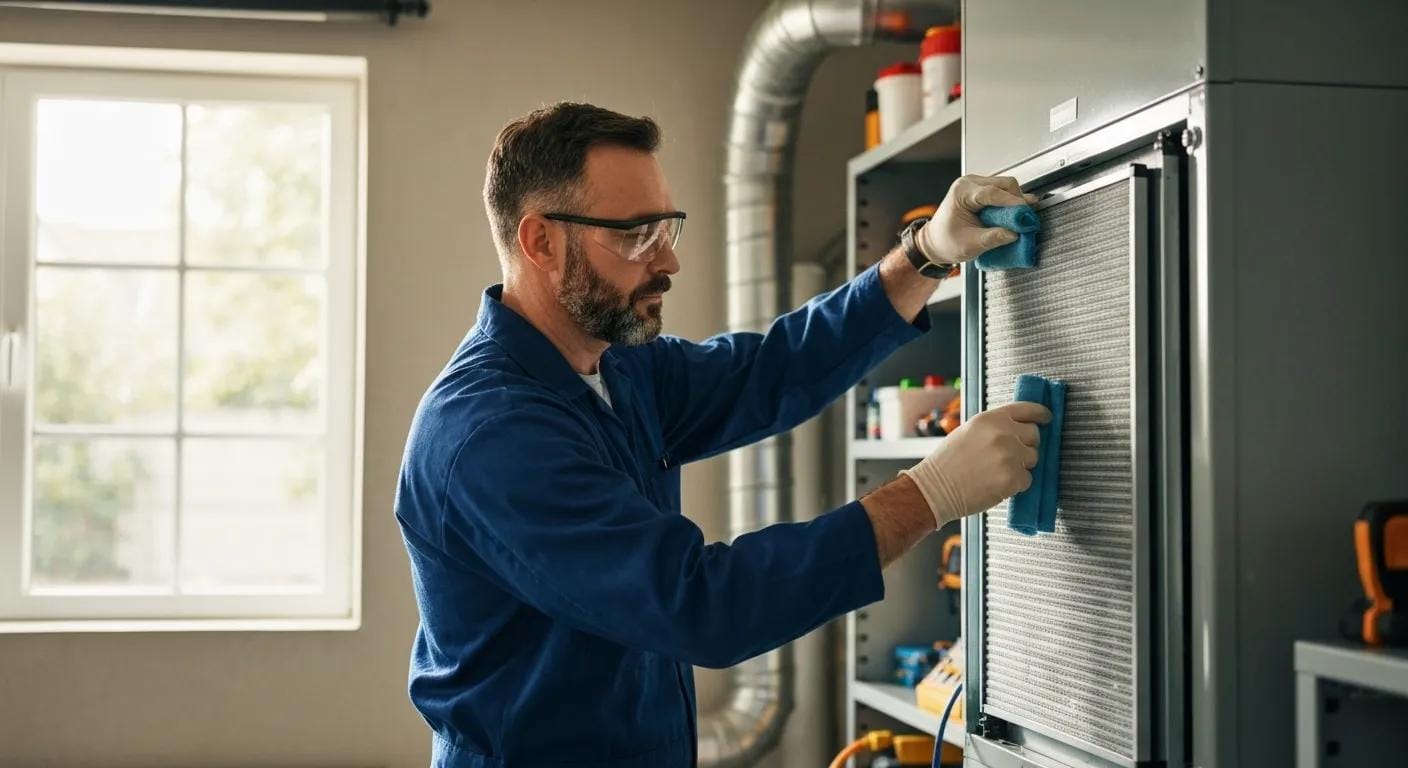
9. Replace your HVAC air filter on schedule
A clogged filter forces your system to work harder to push air through, increasing energy use and wearing down the equipment faster. Most standard filters should be replaced every 1-3 months, more often if you have pets.
10. Use a slow cooker or microwave instead of your oven when possible
A full-size oven uses significantly more energy per meal than a slow cooker or microwave for many dishes. This is a small change per use, but a real one across dozens of meals a month.
11. Wash full loads of laundry and dishes, not partial ones
Both washing machines and dishwashers use roughly the same amount of energy and water whether the load is half-full or completely full — waiting for a full load effectively cuts your per-item energy cost.
Heating and Cooling (Usually Your Biggest Cost Category)
12. Seal obvious air leaks around doors and windows
Weatherstripping and door sweeps are inexpensive and can noticeably reduce the amount of conditioned air escaping your home — see our full guide on [weatherproofing doors and windows] for a room-by-room approach.
13. Use blackout curtains or thermal curtains strategically
Closing curtains on sun-facing windows during peak summer afternoon heat (and opening them for passive solar warmth in winter) can meaningfully reduce how hard your HVAC system has to work.
14. Have your HVAC system professionally serviced annually
A poorly maintained system loses efficiency over time — an annual tune-up (checking refrigerant levels, cleaning components, verifying proper airflow) typically costs far less than the extra energy a neglected system wastes over a year.
15. Close vents and doors in unused rooms — with one caveat
Closing vents in rooms you don’t use can reduce wasted conditioning, but avoid closing too many at once on a central forced-air system, since this can create pressure imbalances that reduce overall efficiency. A few closed vents is fine; closing most of the house is not.
Bigger Changes With Bigger Payoffs
16. Upgrade to ENERGY STAR-certified appliances when it’s time to replace one
When an appliance genuinely needs replacing — not before — choosing an ENERGY STAR-certified model can meaningfully reduce that appliance’s ongoing energy use compared to an older or non-certified equivalent, often paying back the price difference within a few years for major appliances like refrigerators and washers.
17. Add or upgrade attic insulation
Attics are one of the biggest sources of heat loss (in winter) and heat gain (in summer) in most homes. Depending on your home’s age and current insulation level, this is a bigger upfront project, but it’s one of the highest-impact single upgrades available for homes with clearly inadequate insulation.
18. Install a smart thermostat
Beyond just scheduling, smart thermostats learn your patterns and can automatically adjust based on whether anyone’s actually home, often producing meaningful savings over a basic programmable thermostat with minimal ongoing effort. See our full comparison in [smart thermostats compared].
19. Consider a heat pump if you’re due for an HVAC replacement
If your furnace or AC unit is nearing the end of its life, a heat pump can often heat and cool your home more efficiently than separate conventional systems, especially when paired with any available rebates or tax credits — see our full breakdown in [heat pump vs. gas furnace cost].
20. Explore solar if you own your home and use significant electricity
For homeowners with consistently high usage and good sun exposure, solar panels (with or without battery storage) can substantially reduce or even eliminate a grid electricity bill over time, especially factoring in the federal solar tax credit. This is the largest investment on this list, but also the one with the largest potential long-term impact — see our full guide on [how much it costs to install solar panels].
How to Prioritize This List for Your Own Home
Rather than trying to do everything at once, a practical approach:
- Start with the free and cheap changes (#1-11) this week — these require little to no upfront cost and start saving immediately.
- Address any obvious heating/cooling waste (#12-15) over the next month, since these tend to have the biggest impact for the least cost in most homes.
- Plan the bigger upgrades (#16-20) around natural replacement timing — when an appliance actually breaks, when your HVAC system is due for replacement, or when you’re ready to consider a larger home improvement investment — rather than replacing working equipment purely for efficiency gains, which rarely pays back as quickly as replacing something at the end of its life anyway.
Final Thoughts
The biggest mistake most “save on your bill” advice makes is treating every tip as equally important. In reality, a handful of small, free habit changes (cold water washing, thermostat scheduling, LED bulbs) usually deliver the fastest visible results, while the bigger structural changes (insulation, heat pumps, solar) deliver the largest long-term impact but require more planning and upfront investment. Tackling both categories — starting with the free changes now and planning the bigger ones around your home’s natural replacement cycle — is how most households see a real, lasting reduction in their bill rather than a one-time dip.