
Water heating is one of the largest year-round energy costs in a typical home, and it’s also one of the appliances where switching to heat pump technology delivers some of the most dramatic, well-documented savings of any home upgrade. This guide covers exactly how heat pump water heaters work, what they cost installed, real operating savings, and the specific installation requirements worth knowing before you buy.
How a Heat Pump Water Heater Actually Works
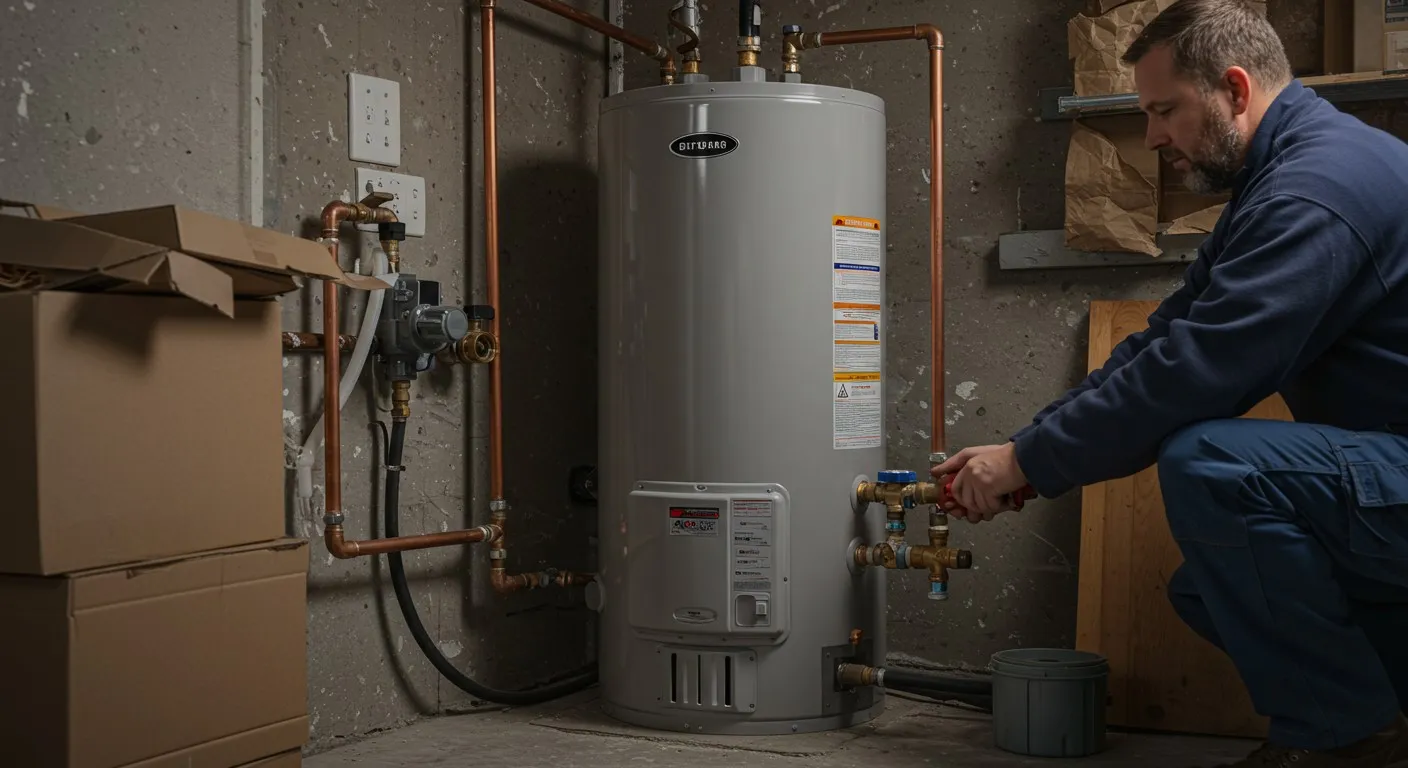
A standard electric water heater generates heat by running electricity through a resistance element — essentially the same principle as a toaster, submerged in a tank of water. A heat pump water heater (HPWH) works completely differently: rather than generating heat from scratch, it extracts existing heat from the surrounding air and concentrates it into the water tank, using a refrigerant cycle nearly identical to the one used in heat pump space heating (covered in our guide on what a heat pump is and how it works).
The simplest way to picture it: a heat pump water heater works like your refrigerator running in reverse — instead of pulling heat out of a food compartment and releasing it into the room, it pulls heat out of the surrounding room air (your garage, basement, or utility closet) and concentrates that heat into your water tank.
Why This Makes Such a Big Efficiency Difference
A standard electric resistance water heater converts electricity to heat at roughly a 1-to-1 ratio — one unit of electricity in, one unit of heat out. A heat pump water heater, because it’s moving existing heat rather than generating new heat from the electricity itself, delivers 2 to 4 units of heat for every 1 unit of electricity consumed — commonly expressed as a Uniform Energy Factor (UEF) around 3.5 for many residential models. This is the same core efficiency principle covered in our guide on what a heat pump is and how it works, applied specifically to water heating instead of space heating.
Real Cost Comparison: HPWH vs. Standard Electric Tank
| Cost category | Standard electric resistance tank | Heat pump water heater |
|---|---|---|
| Typical installed cost | $800-$1,800 | $1,500-$3,000+ |
| Estimated annual operating cost | $550-$720 | $150-$200 |
| Estimated annual savings | — | roughly $400-$550 |
Installation costs can vary with electrical work, plumbing changes, and the location of the unit. For a broader look at heat pump installation expenses, see our guide to how much it costs to install a heat pump.
For a typical family of four replacing a standard electric resistance tank, this translates to a 50-75% reduction in water heating energy costs, with a payback period on the higher upfront cost typically landing in the 3-8 year range, depending on your local electricity rate, actual hot water usage, and any state or utility rebates that apply.
Your actual operating cost will depend on your electricity rate and hot water usage. Our guide to how much electricity a heat pump uses per month explains how energy consumption and local rates affect running costs.
Heat Pump Water Heater vs. Gas Water Heater
This comparison is less universally one-sided than the electric resistance comparison above, but heat pump water heaters win in the large majority of markets at current national rate ranges. The margin narrows specifically in regions with very cheap natural gas and comparatively expensive electricity, but even in most gas-favorable markets, HPWH operating costs still tend to run below standard gas tank costs. The one area where a gas (specifically tankless) system genuinely outperforms a heat pump water heater is very high, simultaneous hot water demand — filling a large soaking tub while someone showers elsewhere, for example — since tankless gas systems heat on demand with high flow rates, while any tank-based system (electric, gas, or heat pump) has to work from stored capacity and a recovery rate.
Installation Requirements Worth Knowing Before You Buy
Heat pump water heaters have a few specific installation requirements that differ from a standard electric tank, worth confirming with an installer before assuming a straightforward swap:
- Adequate air space. HPWHs need roughly 700+ cubic feet of surrounding air space to draw heat from effectively — a small, enclosed closet may not provide enough air volume without modification (like louvered doors or ducting).
- Electrical requirements. Most residential models use the same 240V/30-amp circuit as a standard electric resistance tank, so if you’re replacing an existing electric water heater, your electrical setup is often already compatible.
- A condensate drain, since the heat-extraction process produces condensation that needs somewhere to go, similar to how a central air conditioner or dehumidifier produces condensate.
- Ambient temperature range. HPWHs operate best when the surrounding air is between roughly 40-120°F. In spaces that regularly fall below 40°F — an unheated garage in a cold climate, for example — the unit’s efficiency drops and it can fall back to resistance-only backup mode, losing much of its efficiency advantage during those conditions. Installing in a conditioned basement or utility room, rather than an unheated garage, generally avoids this issue. A few premium models (including some from Rheem and A.O. Smith) include enhanced cold-weather modes rated to maintain better performance down to around 37°F.
For more information about heat pump water heater operation and installation considerations, consult the U.S. Department of Energy’s Heat Pump Water Heaters guide.
Rebates and Incentives in 2026
As with space-heating heat pumps, the federal picture here has changed significantly. The Section 25C federal tax credit, which previously covered up to $2,000 for a qualifying heat pump water heater, expired December 31, 2025, under the same legislation that ended the space-heating heat pump and solar credits — see our [federal solar tax credit 2026 guide] and [heat pump rebates and tax credits available in 2026] for the broader context. Be cautious of any content or sales material still citing this credit as currently available for a 2026 purchase — it reflects outdated information.
For a broader overview of remaining state and utility programs, see our guide to heat pump rebates and tax credits available in 2026. Confirm current availability and eligibility with your state energy office or utility before budgeting for a rebate.
What remains available, following the same pattern as space-heating heat pumps:
- HEAR (income-qualified federal rebate, state-administered), offering up to roughly $1,750 specifically for water heaters for eligible households — though as covered in our broader rebate guide, most states are still in the process of launching disbursement as of 2026, so availability varies significantly by state.
- Utility rebates, commonly in the $300-$800 range depending on your specific utility, and generally more consistently and currently available than the federal HEAR rollout.
- State-specific programs, which vary considerably and are worth checking directly through your state energy office.
How to Size a Heat Pump Water Heater
Sizing follows similar principles to a conventional tank water heater — based on household size and peak hot water demand — though it’s worth discussing with your installer specifically, since HPWH recovery rates (how quickly the tank reheats after use) can differ somewhat from a standard electric or gas tank’s recovery characteristics. A properly sized unit avoids both running out of hot water during peak demand and oversizing (paying for capacity you don’t need).
For additional guidance on choosing an efficient model, consult ENERGY STAR’s heat pump water heater resources, including product information and efficiency criteria.
Common Questions Before Buying
Is it noisy?
Heat pump water heaters do produce some operational noise (similar to a small dehumidifier or mini-fridge compressor) since they contain a compressor and fan, worth factoring in if the unit will be installed near a bedroom or living space rather than a garage or basement.
Does it cool the room it’s installed in?
Yes, to some degree — since it’s extracting heat from the surrounding air, the room it’s installed in will run slightly cooler as a side effect, which is generally a non-issue in a garage or basement but worth knowing if the installation space is a frequently-occupied room.
Can it fully replace a standard tank in any home?
For most homes with adequate air space and appropriate electrical service, yes — the main disqualifying factor is a genuinely small, tightly enclosed installation space without enough air volume, or a consistently very cold installation environment without a cold-weather-rated model.
Final Thoughts
Heat pump water heaters represent one of the more clear-cut efficiency upgrades available for a typical home — a 50-75% reduction in water heating costs compared to a standard electric tank, with a payback period that’s genuinely reasonable even without the now-expired federal tax credit. The main homework before buying is confirming your installation space has adequate air volume and appropriate ambient temperature, checking your specific electrical setup, and looking into current state, utility, and HEAR rebate availability in your area rather than assuming outdated federal credit figures still apply.