
Air conditioning is consistently the single largest driver of a typical summer electric bill, which means it’s also where the biggest opportunities for savings live. The good news is that meaningfully lowering your AC costs doesn’t require accepting a warmer, less comfortable home — most of the highest-impact changes address waste (heat getting into your home unnecessarily, your system working harder than it needs to) rather than asking you to simply tolerate more heat. This guide covers the full range, from free changes you can make today to bigger investments worth planning around.
Free Changes: Do These First
1. Raise your thermostat by just 2-3 degrees
The Department of Energy consistently cites this as one of the highest-return single changes available — each degree you raise your summer setpoint reduces cooling costs meaningfully, and 2-3 degrees is typically small enough to be barely noticeable, especially paired with a ceiling fan (below).
2. Use ceiling fans to feel cooler at a higher setpoint
A ceiling fan doesn’t cool the room itself — it cools you, through air movement across your skin, letting you comfortably raise the thermostat a few degrees without a felt comfort trade-off. Remember to turn fans off when you leave a room, since they cool people, not empty spaces.
3. Close blinds and curtains on sun-facing windows during peak afternoon hours
Direct sunlight through windows adds a real, measurable heat load — closing coverings on south- and west-facing windows specifically during the hottest part of the day (typically early-to-mid afternoon) reduces how hard your system has to work without any equipment changes at all.
4. Run heat-generating appliances during cooler hours
Ovens, dryers, and dishwashers all add heat to your home’s interior, working against your AC system. Running these during early morning or evening hours instead of the hottest part of the day reduces the extra cooling load they create.
5. Close vents and doors in unused rooms — with moderation
Closing vents in rooms you don’t use reduces wasted conditioning, but avoid closing too many at once on a central system, since this can create pressure imbalances that reduce overall efficiency rather than improving it. A few closed vents is fine; closing most of the house is not.
6. Use your bathroom and kitchen exhaust fans strategically, then turn them off
These fans do help remove heat and humidity generated by cooking and showering, but running them longer than necessary actually pulls conditioned air out of your home — use them during and shortly after the activity that created the heat/humidity, then turn them off.
Low-Cost Fixes: Under $50-100
7. Replace your air filter
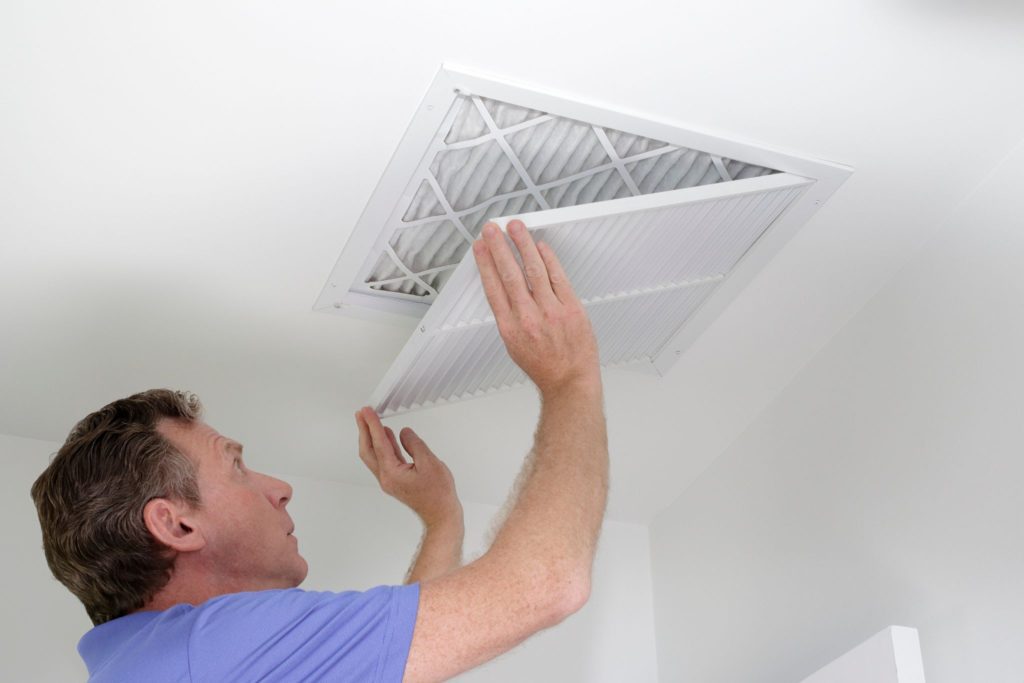
A clogged filter is one of the most common causes of reduced AC efficiency, forcing the system to work harder to push air through. Check monthly and replace every 1-3 months, more often with pets or higher dust levels.
8. Seal obvious air leaks
As covered in our guide on [how to weatherproof doors and windows], gaps around doors and windows let cooled air escape and hot outdoor air in — weatherstripping and caulk are inexpensive, fast fixes with a real, measurable impact on cooling costs.
9. Add reflective or blackout window film
Beyond simply closing curtains, a window film applied directly to sun-facing glass can block a significant portion of incoming solar heat while still allowing light through, addressing the heat gain problem even during hours you want your curtains open.
10. Use a programmable or basic smart thermostat schedule
If you don’t already have a system-wide schedule, setting your thermostat to automatically rise a few degrees during work hours (when the home is empty) and return to your comfort setting shortly before you’re typically home captures savings without requiring any manual daily adjustment.
Medium Investments: Strong Payoff
11. Have your AC system professionally serviced
An annual tune-up — checking refrigerant levels, cleaning coils, verifying proper airflow — keeps your system running at its intended efficiency rather than gradually degrading and using more energy for the same cooling output. See our guide on [heat pump maintenance] for the same core principles, which apply equally to a standalone AC system.
12. Upgrade to a smart thermostat with geofencing
Beyond basic scheduling, a smart thermostat that detects when you’ve left (and adjusts automatically) captures savings during unscheduled absences that a fixed time-based schedule would miss — see our full comparison in [smart thermostats compared].
13. Add attic insulation if it’s clearly inadequate
Attics are one of the biggest sources of summer heat gain in an under-insulated home, since a hot attic radiates heat down into your living space throughout the day. If your attic insulation is visibly thin or compressed, this is one of the higher-return projects available at this budget level.
14. Install door sweeps and threshold seals
Beyond general weatherstripping, the gap under exterior doors is a commonly overlooked source of both draft and cooled-air loss — a door sweep closes this gap for a modest cost.
Bigger Investments: Highest Long-Term Impact
15. Consider a heat pump if your AC system is aging
As covered in our guide on [what is a heat pump and how does it work], a heat pump handles both heating and cooling from a single system, often more efficiently than a standalone AC unit, particularly when your existing equipment is nearing the end of its life anyway.
16. Upgrade to a higher-SEER system when replacement is due
A newer AC system with a higher SEER2 rating uses meaningfully less energy for the same cooling output compared to an older, lower-efficiency unit — worth prioritizing specifically when your current system needs replacing anyway, rather than replacing working equipment early purely for efficiency gains.
17. Add comprehensive attic and wall insulation
For homes with genuinely inadequate insulation throughout (not just the attic), a full insulation upgrade delivers the largest single reduction in both summer cooling and winter heating waste, since it addresses the root cause of heat transfer rather than just symptoms.
18. Replace old, inefficient windows
Single-pane or very old double-pane windows allow significantly more heat transfer than modern, properly-sealed options — a bigger investment than window film, but a permanent structural improvement.
A Common Misconception Worth Addressing
Turning your AC completely off during the day to “save energy” while you’re away, then cranking it to a much colder setting when you return, is often less efficient than maintaining a moderate, consistent setback — since bringing a home back down from a significantly higher indoor temperature requires the system to work hard and continuously for an extended period, sometimes offsetting much of the daytime savings. A programmable thermostat’s moderate setback (typically 7-10 degrees, not a full shutoff) generally strikes a better balance than either extreme.
How to Prioritize Based on Your Situation
- Renters or short-term residents: Focus on the free changes (#1-6) and easily removable low-cost fixes (window film, weatherstripping), since these don’t require permanent property modifications.
- Homeowners planning to stay long-term: Start with the free changes immediately, but plan the bigger structural investments (insulation, windows, system replacement) around your budget and your current equipment’s natural replacement timeline.
- Anyone with an aging AC system: Prioritize professional maintenance now (#11) to extend its useful life, while planning for a higher-efficiency replacement (#16 or #15) as a longer-term budget item rather than an emergency purchase.
Final Thoughts
Reducing your summer AC bill comes down to a combination of using less cooling capacity than you think you need (through fans, shading, and smart scheduling) and making sure the cooling you do use isn’t being wasted through leaks, a dirty filter, or poor insulation. Start with the free changes this week, layer in the low-cost sealing and filter maintenance over the next month, and treat the bigger investments — insulation, windows, a more efficient system — as planned upgrades tied to your budget and your equipment’s natural replacement cycle, rather than something to tackle all at once.