
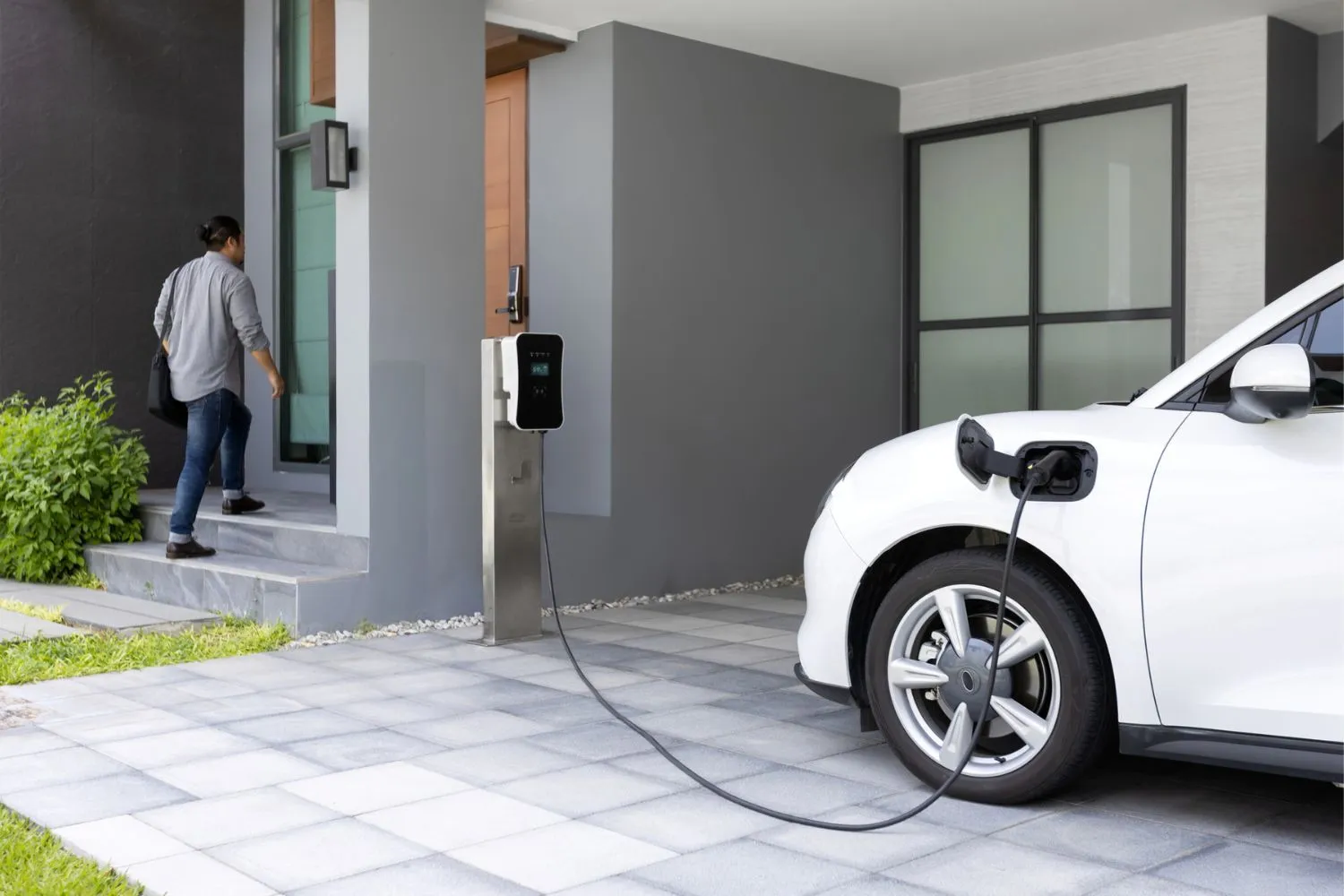
Owning an EV already makes overnight charging the cheapest way to fuel a vehicle, as covered in our guide on [best EV charging electricity plans] — but a “dumb” charger (one that just delivers power whenever it’s plugged in) can’t actually take advantage of that opportunity automatically. A smart EV charger closes that gap, scheduling charging to land precisely in your cheapest rate window, coordinating with solar production, and in some cases avoiding an expensive electrical panel upgrade entirely. This guide covers how smart chargers actually save money and how the leading 2026 models compare.
How Much a Smart Charger Actually Saves
The savings case is well-documented and substantial for anyone on a time-of-use (TOU) rate plan:
- EV owners commonly report saving $400-$800 per year compared to uncontrolled daytime charging, with the exact figure depending on the specific gap between your utility’s peak and off-peak rates.
- That peak-to-off-peak gap varies significantly by utility — as examples, PG&E (California) prices peak power around $0.45/kWh versus roughly $0.16/kWh off-peak, while Xcel Energy (Colorado) shows a narrower but still meaningful spread. See our [time-of-use rates explained] guide for the broader mechanics behind these pricing structures.
- Off-peak hours (commonly 9 PM-7 AM) frequently cost 50-70% less than peak rates, and smart scheduling to automatically land within that window is consistently cited as delivering 30-50% savings on charging costs specifically.
One important caveat directly from the data: if you’re on a flat-rate electricity plan rather than time-of-use pricing, a smart charger’s scheduling feature delivers little to no savings, since your rate doesn’t change based on when you charge — in that scenario, a no-frills budget charger performs just as well for a fraction of the price.
The Top Smart EV Chargers, Compared
Emporia Level 2 — Best for Whole-Home Energy Integration
Priced around $400-$500 (with an optional $50 Emporia Vue energy monitor add-on for full integration), the Emporia Level 2 delivers 48-amp output — roughly 36 miles of range per hour, matching the faster options in this category. Its standout feature is how it fits into Emporia’s broader energy ecosystem, covered in our guides on [best apps to track your home energy usage] and [how home energy monitors work]: paired with the Vue monitor, the app shows real-time solar production, whole-home usage, and EV charging demand together in a single dashboard, rather than treating EV charging as an isolated data point.
Best for: Households that already have (or plan to get) an Emporia energy monitor and want a single, unified view of their entire home’s energy picture.
ChargePoint HomeFlex — Best for Charging Speed and Broad Compatibility
Delivering 50-amp output (roughly a 6-8 hour full charge for a typical 60-75 kWh battery, faster than most 40A competitors), the HomeFlex pairs strong hardware specs with smart scheduling that independent testing has shown can deliver the full 30-50% savings range on time-of-use plans.
Best for: Households wanting the fastest charging speed in this category alongside solid smart scheduling.
Wallbox Pulsar Plus — Best for Flexible Solar Charging Modes
At $600-$700, the Pulsar Plus stands out for its Eco-Smart solar technology, offering two distinct modes: “Full-Green” (charges using 100% solar production only) and “Eco” (blends solar and grid power to guarantee a minimum charge level by morning regardless of weather). This flexibility is particularly useful in regions with variable cloud cover, where a pure solar-only mode might not reliably deliver a full charge. It works with any solar inverter brand (not locked to a specific manufacturer), though solar-specific functionality requires an additional power meter, and offers a NACS-ready cable option for Tesla compatibility.
Best for: Homeowners with existing solar (any brand) who want granular control over how much of their charging comes from solar versus grid power.
Tesla Universal Wall Connector — Best Ecosystem Integration and Ongoing Refinement
Holding the top position in multiple 2026 comparisons, largely on the strength of continuous firmware refinement rather than new hardware, the Tesla Universal Wall Connector remains the deepest ecosystem integration available for Tesla owners, with growing relevance for non-Tesla EVs as NACS (the Tesla connector standard) adoption spreads across other automakers in 2025-2026. Existing J1772-equipped vehicles remain compatible via adapter, so the standard’s rise doesn’t strand current EV owners.
Best for: Tesla owners, and increasingly, owners of other EVs adopting the NACS standard.
SolarEdge Smart EV Charger — Best for Existing SolarEdge Systems
Priced at $750-$850, this charger integrates natively with SolarEdge inverters (eliminating the need for separate communication hardware) and includes a distinctive “Solar Boost” mode that draws from both grid and solar simultaneously during peak production hours, charging up to 2.5x faster than standard solar-only charging. The trade-off is that it’s proprietary to SolarEdge systems and has limited availability as a standalone unit for non-SolarEdge homes.
Best for: Homeowners already using or specifically installing a SolarEdge solar system.
Schneider Charge — Best for Avoiding a Panel Upgrade
This is a genuinely important, under-the-radar technical detail: the Schneider Charge’s built-in SmartAmp intelligent load management system continuously monitors your home’s real-time electricity use and automatically scales charging output up or down to stay within your electrical panel’s existing capacity — without requiring a separate load management accessory. Critically, it’s certified to UL 3141, a safety standard that allows electrical inspectors to exclude the charger’s amperage from your home’s official load calculation under the 2026 National Electrical Code. In practical terms, this can mean the difference between installing a Level 2 charger as a straightforward add-on versus needing an expensive electrical panel upgrade first, in homes with limited existing capacity.
Best for: Homes with limited electrical panel capacity where a standard charger installation might otherwise require a costly panel upgrade.
Grizzl-E Classic — Best Budget, No-Frills Option
At roughly $300, this charger delivers the same core charging speed as many “smart” competitors but without app connectivity or scheduling features — a genuinely reasonable choice specifically for households on a flat-rate electricity plan, where smart scheduling wouldn’t deliver meaningful savings anyway.
Best for: Flat-rate electricity plan households who don’t need TOU scheduling or solar integration.
Quick Comparison Table
| Charger | Price | Standout feature | Best for |
|---|---|---|---|
| Emporia Level 2 | ~$400-500 | Unified whole-home energy dashboard | Whole-home energy visibility |
| ChargePoint HomeFlex | Mid-range | 50A speed, strong TOU scheduling | Fastest charging + solid savings |
| Wallbox Pulsar Plus | ~$600-700 | Full-Green/Eco solar modes | Flexible solar control, any inverter brand |
| Tesla Universal Wall Connector | Mid-premium | Deepest ecosystem integration | Tesla owners, NACS adopters |
| SolarEdge Smart EV Charger | ~$750-850 | Solar Boost, native SolarEdge integration | Existing SolarEdge homes |
| Schneider Charge | Mid-range | UL 3141 — avoids panel load calc upgrade | Limited electrical panel capacity |
| Grizzl-E Classic | ~$300 | No-frills, same charging speed | Flat-rate plans, budget priority |
Three Types of Solar-Compatible Chargers, Explained
It’s worth understanding this distinction before buying, since the terminology gets used loosely:
- DC-coupled units — connect more directly into a solar system’s DC side, a less common residential configuration.
- Solar-monitoring Level 2 chargers — the most common consumer type (Wallbox, SolarEdge, Emporia fall here), which use CT clamps or inverter communication to monitor solar production and schedule or throttle charging accordingly, while still delivering standard AC power to the vehicle.
- Portable off-grid kits — designed for occasional or travel use, not a permanent home charging solution.
For a typical home charging setup, a solar-monitoring Level 2 charger is almost always the right category — DC-coupled and portable options serve more specialized use cases.
How to Choose the Right One for You
- Check your electricity plan type first. If you’re on a flat rate, a budget charger like the Grizzl-E Classic performs just as well as premium smart models for charging speed — save the money.
- If you’re on time-of-use rates, prioritize strong scheduling features (ChargePoint, Emporia, or similar) to capture the documented 30-50% savings range.
- If you have solar, match the charger to your specific inverter brand where a native integration exists (SolarEdge, Enphase-compatible options), or choose a brand-agnostic option like Wallbox if you want flexibility.
- Check your electrical panel’s available capacity before assuming you need an upgrade — a load-management-certified charger like the Schneider Charge can sometimes avoid that cost entirely.
- Confirm NACS/J1772 compatibility with your specific vehicle, since the connector standard landscape is actively shifting as of 2026.
Final Thoughts
A smart EV charger isn’t just a convenience upgrade — for anyone on a time-of-use electricity plan, it’s a genuine, well-documented way to save $400-$800 a year simply by ensuring charging happens automatically during the cheapest hours rather than whenever it’s convenient to plug in. The right specific model depends heavily on your situation: Emporia for whole-home energy visibility, ChargePoint for raw speed and scheduling, Wallbox or SolarEdge for solar-specific control, and the Schneider Charge specifically if panel capacity is a concern. If you’re on a flat-rate plan without solar, save the premium and choose a budget model instead — the smart features simply won’t have anything to optimize around.