
Our [cost to install a heat pump] guide mentioned geothermal systems briefly, at a cost range roughly double a standard air-source heat pump — enough to make most homeowners stop and ask whether that premium is actually justified. This guide answers that directly: how geothermal technology differs from the air-source heat pumps covered elsewhere on this site, what it really costs installed in 2026, and the real payback math across different climates and fuel types.
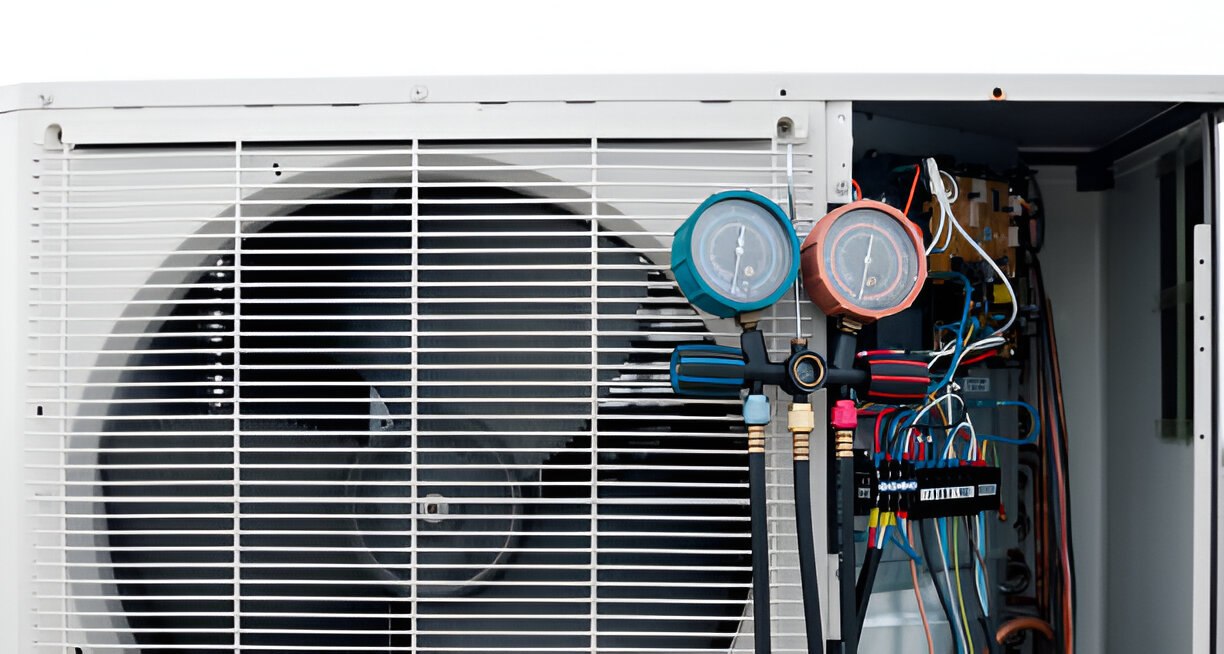
How Geothermal Actually Differs From Air-Source
As covered in our guide on [what is a heat pump and how does it work], an air-source heat pump extracts heat from outdoor air, which fluctuates significantly with the weather — colder air means less available heat to extract, which is why efficiency declines in winter. A geothermal (ground-source) heat pump uses the same core heat-moving principle, but extracts heat from the ground instead, via buried pipes filled with a heat-transfer fluid. Below the frost line, ground temperature stays remarkably stable year-round — typically in the 50-60°F range regardless of whether it’s a blistering summer day or a sub-zero winter night. That stability is the entire reason geothermal systems outperform even the best cold-climate air-source models: they’re never fighting against an extreme, fluctuating heat source the way an air-source system is on the coldest or hottest days.
In practice, this translates to real efficiency numbers: geothermal systems typically run a COP of 3.5-5.0 (350-500% efficiency) compared to 2.0-3.5 for even a strong air-source heat pump — a genuine 30-50% efficiency advantage over the best air-source cold-climate technology covered in our [best heat pump brands] guide.
What Geothermal Actually Costs Installed in 2026
| Loop type | Installed cost | Best for |
|---|---|---|
| Horizontal loop | $18,000-$30,000 | Larger lots with adequate land to bury pipe horizontally |
| Vertical loop | $25,000-$45,000+ | Small lots, since it requires drilling rather than wide trenching |
| Pond/lake loop | Often the cheapest option | Properties with direct access to an adequately-sized body of water |
Across all configurations, a typical residential system lands somewhere in the $18,000-$45,000 range, with some larger or more complex installations (difficult drilling conditions, larger homes) running higher still.
No Federal Tax Credit in 2026 — A Correction Worth Making Explicitly
This is worth stating plainly, since outdated information is still circulating: the federal 30% Residential Clean Energy Credit (Section 25D), which previously applied to geothermal installations, expired for any system placed in service after December 31, 2025 — the same cutoff covered in our [federal solar tax credit 2026 guide] and [heat pump rebates and tax credits available in 2026] guide. On a $30,000 installation, that credit was worth roughly $9,000 — its loss meaningfully extends the payback period compared to pre-2026 figures still floating around in some outdated marketing content and articles.
What does remain available, consistent with our broader rebate coverage: the HEAR (High-Efficiency Electric Home Rebate) program, offering up to $8,000 for qualifying heat pump installations including ground-source systems, though — as covered in our dedicated rebate guide — most states are still in the process of actually launching disbursement as of 2026, so check your specific state’s rollout status before counting on this figure.
The Real Payback Math, by Scenario
Multiple independent analyses, including Monte Carlo modeling informed by Department of Energy performance data, converge on a consistent pattern: what you’re replacing matters more than almost any other variable.
Replacing oil or propane heat (fastest payback)
This is where geothermal’s economic case is strongest. Annual savings commonly run $1,200-$2,500/year compared to oil or propane, producing a payback period of roughly 4-14 years, with a median around 7.5-9.2 years depending on the specific comparison system, even with no federal credit factored in. A household in a cold climate spending $3,500/year on propane might drop to roughly $900-$1,200/year in geothermal operating costs — a dramatic enough gap to justify the upfront premium within a reasonable ownership horizon.
Replacing an aging air-source heat pump
A narrower, more rate-dependent comparison. If the vertical loop premium over a comparable air-source system runs $15,000-$21,000, payback on that premium alone can stretch to 19-30 years — a genuinely long horizon. But where the loop premium is smaller (closer to $6,000-$10,000, more common with horizontal loop configurations on suitable land), payback shortens considerably to roughly 8-14 years.
Replacing a gas furnace plus separate AC
Median payback lands around 9.2 years according to DOE-informed modeling, reflecting natural gas’s relatively low per-unit cost (as covered in our [heat pump vs. gas furnace cost] comparison) partially offsetting geothermal’s efficiency advantage.
Replacing electric resistance heat
Similar to the pattern in our [heat pump vs. electric baseboard heating] comparison, replacing inefficient electric resistance heating produces some of the fastest, most clear-cut payback scenarios for geothermal, often in the same favorable range as displacing oil or propane.
Why Your Electricity Rate Matters More Than You’d Expect
Since geothermal systems still run on electricity (just far more efficiently than resistance heating), your local electricity rate significantly affects the real-dollar value of that efficiency advantage. A homeowner paying 34 cents/kWh (comparable to California) sees roughly double the dollar-value savings of an identical system in a state paying 15 cents/kWh, even though the underlying efficiency and energy-unit savings are identical — worth checking your own rate directly rather than relying on a generic national payback estimate.
The Underappreciated Lifespan Advantage
This is a detail that simple payback calculations often miss entirely: the ground loop itself typically lasts 50+ years, essentially outliving the building systems around it, while the indoor heat pump unit has a rated lifespan of 20-25 years — notably longer than a typical air-source heat pump’s 15-20 years. When the indoor unit eventually needs replacement, you’re only paying for that component (commonly $3,000-$8,000), not re-excavating or re-drilling the ground loop — a significant long-term cost advantage over a system’s full multi-decade lifespan that a simple first-cycle payback number doesn’t capture.
When Geothermal Is Decisively Worth It
- Cold or mid-climate homes currently heating with oil or propane, where the fuel cost gap alone often justifies the investment within a reasonable timeframe.
- Homeowners planning to stay 12+ years, since geothermal is fundamentally a long-hold investment — the upfront premium needs time to be recovered through operating savings.
- Properties with suitable land for a horizontal loop specifically, since this configuration keeps the cost premium over air-source meaningfully smaller than a vertical loop requires.
- Homes in states with high electricity rates, where the same efficiency advantage translates to larger real-dollar annual savings.
When Air-Source Is the More Sensible Choice
- Homes already on relatively cheap natural gas, where the fuel-cost gap geothermal needs to overcome is smaller.
- Smaller lots requiring an expensive vertical loop, where the cost premium over air-source is largest and hardest to justify within a reasonable payback window.
- Shorter ownership horizons, since air-source heat pumps’ lower upfront cost means faster amortization specifically during the years you’re actually in the home.
- Homes without easy ground access for excavation or drilling (dense urban lots, challenging soil or rock conditions that increase installation complexity and cost further).
Final Thoughts
Geothermal heat pumps genuinely do cost roughly double a comparable air-source system upfront, and losing the federal tax credit at the end of 2025 has meaningfully stretched the payback math compared to prior years — but the investment still makes clear economic sense for a specific, well-defined set of households: cold-to-mid climate homes currently burning oil or propane, with a reasonable ownership horizon of 12+ years and suitable land for a horizontal loop. Outside that core scenario — mild climates, cheap existing gas service, small lots requiring vertical drilling, or a shorter time horizon — a cold-climate air-source heat pump (covered throughout the rest of this HVAC section) is very often the more sensible choice, delivering most of the efficiency benefit at meaningfully less upfront risk.